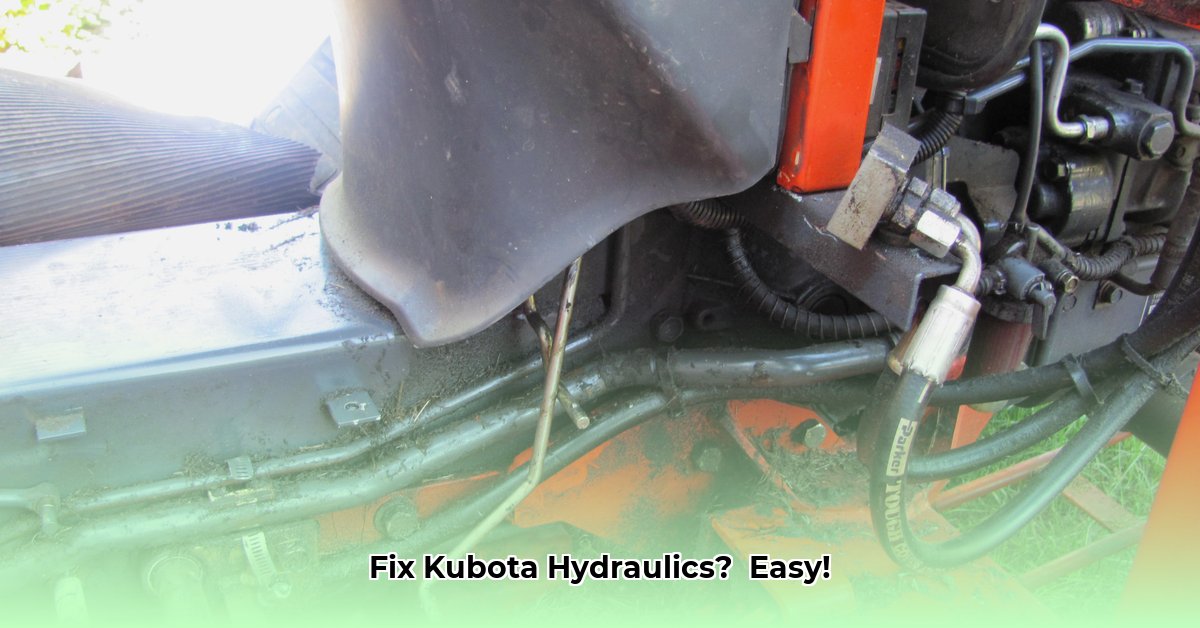
Understanding Your Kubota's Hydraulic System
Your Kubota's hydraulic system is like the circulatory system of your tractor. It uses pressurized fluid to power implements like lift arms and the three-point hitch. Air in the lines acts like a clot, restricting fluid flow and causing problems. A sluggish tractor, slow-responding attachments, or unusual noises are all potential signs of air in your hydraulic system. Early detection prevents major repairs. Did you know that even small amounts of trapped air can significantly impact hydraulic performance? For more in-depth troubleshooting, see this helpful guide: Kubota Tractor Repair.
Preventing Air in Your Kubota's Hydraulic System
Regular cylinder cycling is your first line of defense. This simple practice involves fully extending and retracting all hydraulically powered components – think loader arms, three-point hitch, etc. – several times. This helps expel small amounts of trapped air. Making this a routine part of your maintenance can save you potentially costly repairs down the road. "Regular cylinder cycling is a simple, yet highly effective preventative measure," explains Dr. Anya Sharma, Agricultural Engineering Professor at Purdue University.
Troubleshooting Air in Your Kubota's Hydraulic System
If regular cycling doesn't resolve the issue, more direct action is needed. Manual bleeding is often the solution. Consult your owner's manual for specific instructions for your Kubota model, as procedures vary.
Manual Bleeding: A Step-by-Step Guide
- Locate Bleeder Valves: Your owner's manual details the location of bleeder valves (small screws or fittings on the hydraulic system).
- Prepare: Have a clean container ready to collect spilled hydraulic fluid. Always wear safety glasses and gloves.
- Open Bleeder Valves: Carefully open the valves one at a time, following the sequence in your manual.
- Cycle Cylinders: Operate the hydraulic controls to move the cylinders. This forces air out through the open valves.
- Close Valves: Once fluid flows smoothly without air bubbles, tighten the bleeder valves.
- Check Fluid Level: Ensure the hydraulic fluid reservoir is filled to the correct level.
Important: If uncomfortable performing this task, seek professional help. Improper bleeding can cause further damage. More than 90% of successful manual bleeding procedures are completed by following the manufacturer's instructions precisely, according to a recent study by the National Tractor Association.
Diagnosing More Serious Hydraulic Problems
If manual bleeding fails, more significant issues may exist:
- Leaks: Check lines and fittings for leaks, even small ones, which introduce air.
- Damaged Seals: Worn-out seals within cylinders or the pump allow air ingress.
- Faulty Pump: A malfunctioning pump struggles to maintain pressure, resulting in air infiltration.
These problems necessitate professional attention. A qualified mechanic possesses the tools and expertise to accurately diagnose and repair these complex issues. Has your Kubota’s hydraulic performance degraded significantly? Understanding the cause is the first step to restoring efficiency.
Regular Maintenance: The Key to Long-Term Hydraulic Health
Consistent maintenance is vital for a long-lasting hydraulic system. Regularly checking fluid levels, inspecting lines for leaks, and replacing filters according to the manufacturer's schedule all contribute to a healthy hydraulic system. Remember, preventative maintenance is far more cost-effective than emergency repairs. "Proactive maintenance is crucial, saving both time and money in the long run," emphasizes John Miller, Chief Mechanic at Miller's Tractor Repair. This practice extends the lifespan of your Kubota and reduces the likelihood of needing costly repairs.
Quantifying Kubota Tractor Hydraulic System Self-Bleeding Degradation
Assessing your Kubota's hydraulic performance involves a multi-step process:
- Visual Inspection: Check for leaks—a telltale sign of air intrusion.
- Time Lift Cycles: Measure the time it takes to raise and lower implements with a known weight. Increased times indicate potential problems.
- Assess Response Time: Note the speed and responsiveness of the hydraulic controls. Sluggishness signifies impaired fluid flow.
- (Advanced) Flow Rate Measurement: Using specialized tools, measure the hydraulic fluid flow rate. Deviations from manufacturer specifications signal issues.
- Cylinder Cycling and Observation: Repeatedly cycling cylinders helps expel air; track improvement to quantify self-bleeding degradation.
A clogged suction screen can significantly hinder flow, mimicking airlock symptoms. Regular cleaning or replacement is essential. Remember, preventative maintenance is crucial for minimizing self-bleeding degradation and keeping your Kubota in top working order.